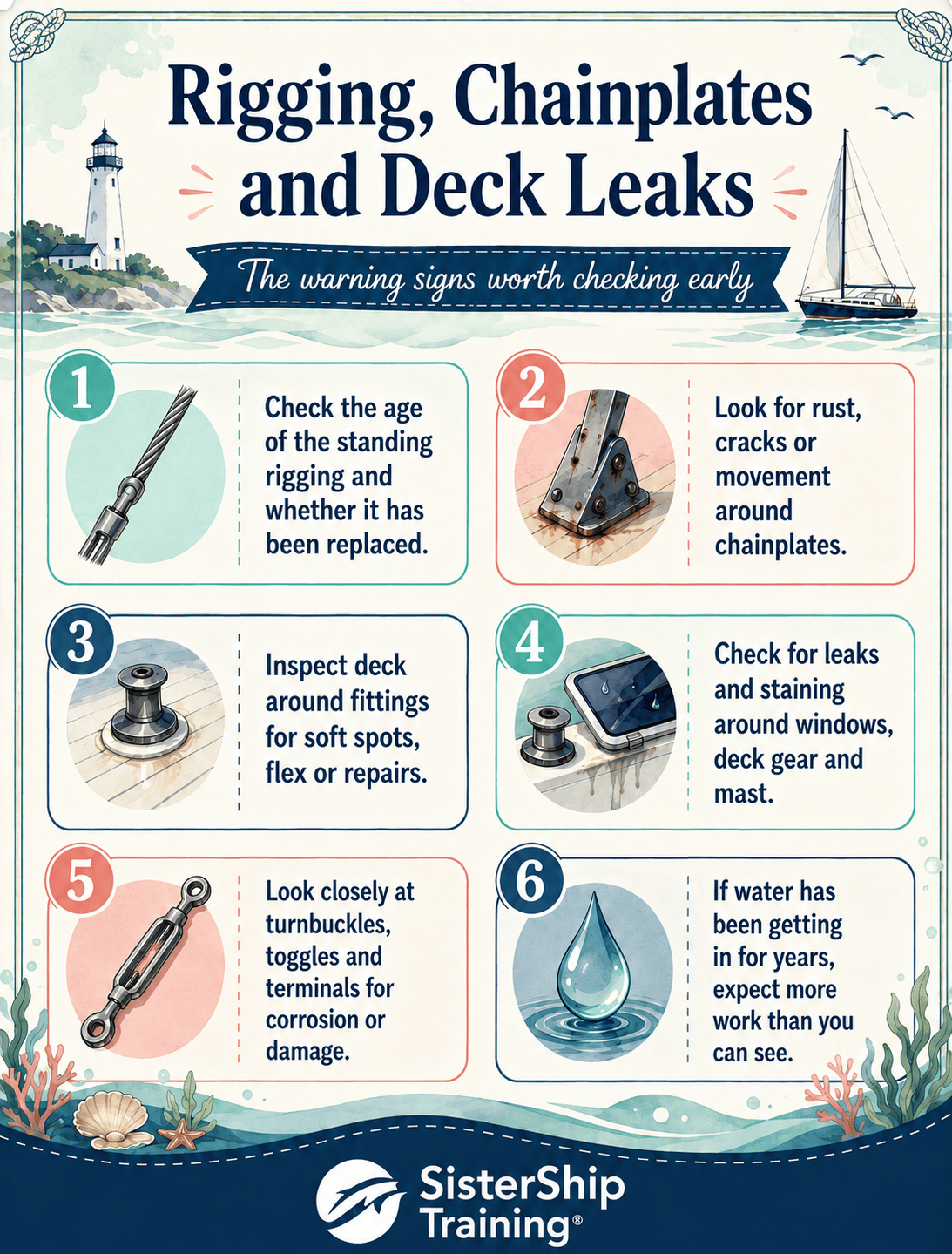

Rigging, chainplates and deck leaks are worth checking early when you are buying a used sailboat.
They are not small details. They can affect safety, insurance, survey findings and the amount of work waiting for you after purchase. You do not need to be a surveyor to notice useful warning signs, but you do need to look properly.
Start with the age of the standing rigging
Ask when the standing rigging was last replaced. If the seller does not know, make a note. Unknown rigging age does not automatically mean the boat is wrong, but it may affect insurance, survey recommendations and your early costs.
Ask whether there are invoices or records, not just a verbal answer.
Look closely at chainplates
Chainplates are a critical area because they transfer rig loads into the boat.
Look for:
- rust staining
- cracks
- movement
- damaged sealant
- water marks nearby
- soft or stained interior areas around the attachment points
If chainplates are hidden behind furniture or liners, that is something to raise with the surveyor.
Check the deck around fittings
Walk the deck carefully and look around winches, tracks, stanchions, cleats, hatches, vents and other fittings. You are looking for soft spots, flex, repairs, cracking, water staining or anything that suggests water has been getting in.
A deck leak is not always obvious from above. Sometimes the clues are inside the boat.
Look around windows, deck gear and the mast
Leaks often show up around windows, hatches, deck fittings and the mast area.
Inside the boat, look for:
- staining
- mould
- soft timber
- lifted lining
- damp smells
- rusty fasteners
- repeated sealant repairs
Fresh sealant is not always bad, but it is worth asking what was fixed and why.
Inspect turnbuckles and terminals
Look closely at the lower ends of the rigging. Check turnbuckles and terminals for corrosion, distortion, cracks, missing split pins, poor alignment or anything that looks neglected.
Small parts can tell you a lot about how the boat has been maintained.
Water usually means more work than you can see
If water has been getting into a deck or structure for years, expect more work than the first viewing shows. This does not mean every leak is a disaster. Boats leak and older boats especially need more maintenance. But long-term water entry can become expensive, particularly if it affects core material, chainplates, bulkheads, deck fittings or interior structure.
Ask clear questions before you commit
Useful questions include:
- When was the standing rigging last replaced?
- Are there receipts?
- Are there known deck leaks?
- Have any soft areas been repaired?
- Has a surveyor previously commented on the deck or rig?
Rigging and deck issues are not always reasons to walk away, but they are reasons to step back for a moment, ask better questions and get proper professional checks before buying.
A Recent Experience
We recently looked at a boat which was a very good price, but we went home, added up all the additional costs; including travel to/from the boat (as it was a fair old trot from us) and the costs to get it up to scratch to move it, and suddnely the boat became too expensive.
More Information
Want a clearer way to assess a boat before you buy? The Buying a Cruising Sailboat course walks you through red flags, survey questions and decision checks before you commit.
Continue Your Boat-Buying Research
For a broader inspection guide, read What Should I Look for When Viewing a Boat?
Do not stop at the rigging. Check the rest of the boat with What Systems Should I Check Before Buying a Used Boat?
For an independent professional inspection, read How Do I Choose a Boat Surveyor?